If you were to daydream about a completely average beekeeper, what would the beekeeper in your mind look like?
The stereotypical image is often of a gentle, nature-conscious, fairly wealthy retiree looking for a fulfilling hobby. There are indeed beekeepers who fit that description but Matt insists that beekeepers actually come in all shapes and sizes!
Admittedly, Matt is 35 years old and is able to feel youthful every time he meets with members of the Harrogate & Ripon Beekeepers Association. But, at the same time, his presence proves that not every beekeeper is over 60!
One of Matt’s personal campaigns is to encourage more people to take up beekeeping because it is an incredible hands-on way to connect with nature. He’s especially interested in inspiring younger people to learn about our fascinating honey-making insects and how to care for them.
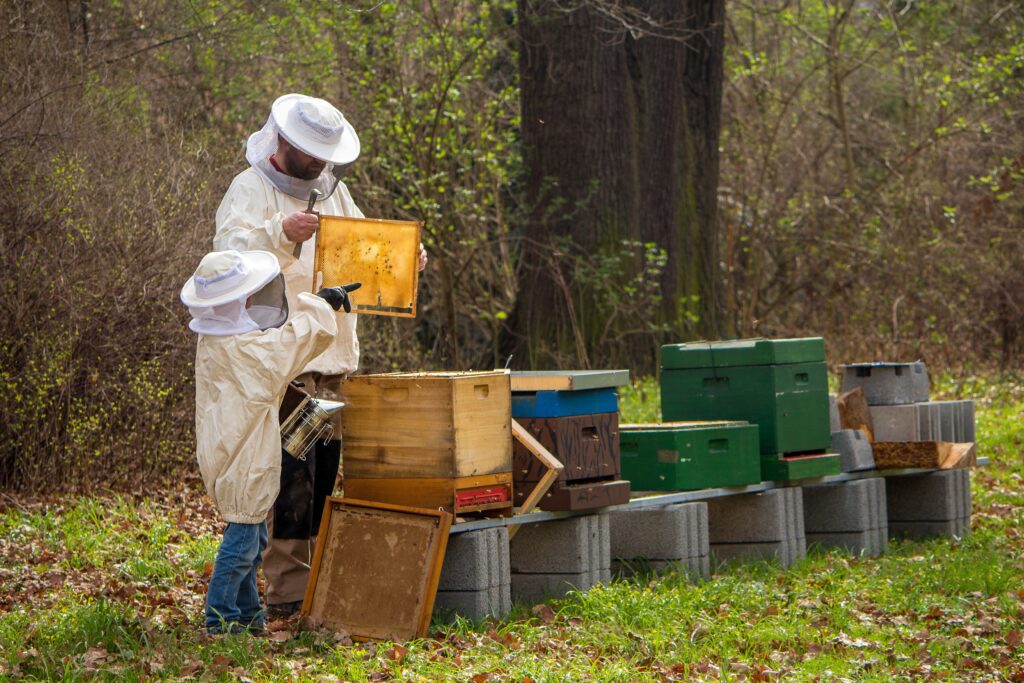
In your daydream, was the beekeeper buff?
It’s something people don’t necessarily think about but beekeeping is actually physically intense! A beekeeper must lift, lug and lay wooden supers, often while traversing uneven ground, and those supers could be storing 25-30lb of honey!
Having worn a beesuit last year (see ‘Faye’s Diary: August 2025‘), I can say from personal experience that their design doesn’t prioritise mobility. And, even just visiting Matt’s apiaries last summer, it was getting uncomfortably oven-esque in that beesuit. I can only imagine how tough it is to carry heavy objects with the sun’s heat pounding down on you while wearing a beekeeper’s uniform.
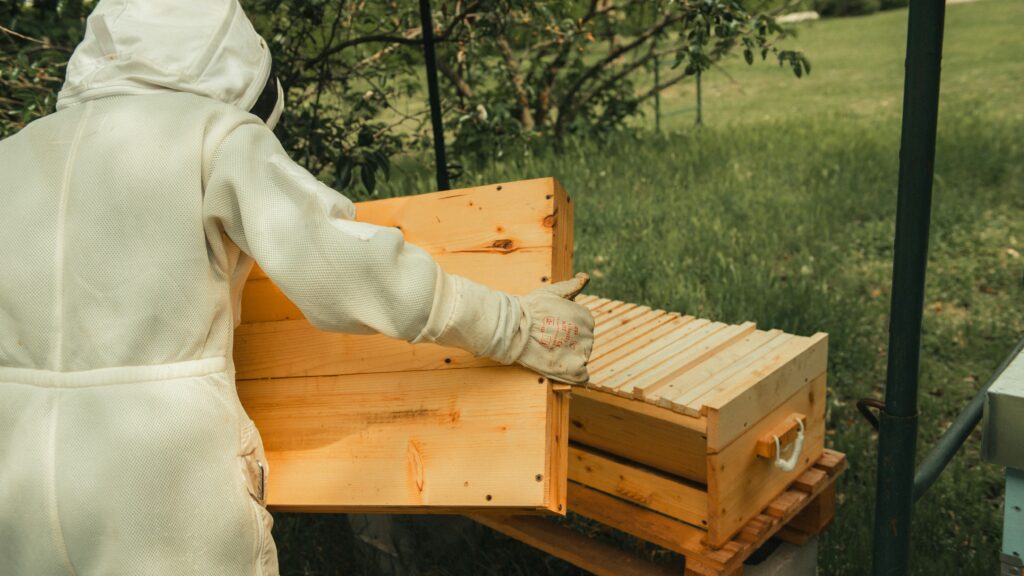
To reduce the intensity, beekeeping in pairs is a popular choice. The duo can carry the load together when they need to move a super for hive inspections or to take it away to harvest delicious honey! Pairing up also makes beekeeping a fun, social experience.
Solo beekeeping is still the most common way to do it though, and it’s what Matt chooses. He loves all his buzzy girls (…and the drones) and values quality time with them. It’s his meditation and the best mental health care he’s ever experienced. Winters hit him hard because he misses his bees, but once they’re reunited in the spring, Matt finds himself in a great place mentally.
Of course, since Matt likes to tend to his bees alone, that means he needs to be in a great place physically too!
Last year, while working at his apiaries, he learned the hard way that he hadn’t been doing enough to protect himself from injury: he slipped a disc in his back!
What would Matt do without his bees? He never wants to find out. So, he has designed a workout routine to condition his core and back to prevent any repeat injuries. He doesn’t want anything to cause his beekeeping career to come to an abrupt early end!
This is Matt’s kettlebell training program:
| Exercise | Duration | Benefit to Beekeepers |
| Goblet Squat | 10 repetitions | supports upright posture for lifting heavy super boxes |
| Suitcase Carry | 30 metres per side | stabilizes the core when carrying an uneven load |
| Kettlebell Halo | 10 repetitions | supports mobility of the shoulders for honey extraction |
| Glute Bridges | 15 repetitions | strengthens glute muscles to ensure the back doesn’t take the strain when lifting |
| Single Arm Row | 10 repetitions per side | strengthens the arms for lifting and pulling |
Using his kettlebell collection in a range of weights – up to 16kg to simulate a generously filled super – Matt has been completing this routine, repeating it 3-4 times with a 60 second rest break between each round.
If you’d like to join Matt, it could certainly be beneficial for helping you to keep up with the physical demands of beekeeping. But please do these two things first:
- It’s best to check with your GP or personal trainer that you’ll be safe performing these moves.
- If these exercises aren’t familiar to you, try them without weights until you get used to the motion and technique.
After all, the last thing you want is to suffer an injury when training to prevent yourself from suffering an injury!
The most important thing to take from this blog post is that your health matters and it’s irreplaceable. Take care of your body so that you can enjoy a lifelong relationship with your bees.