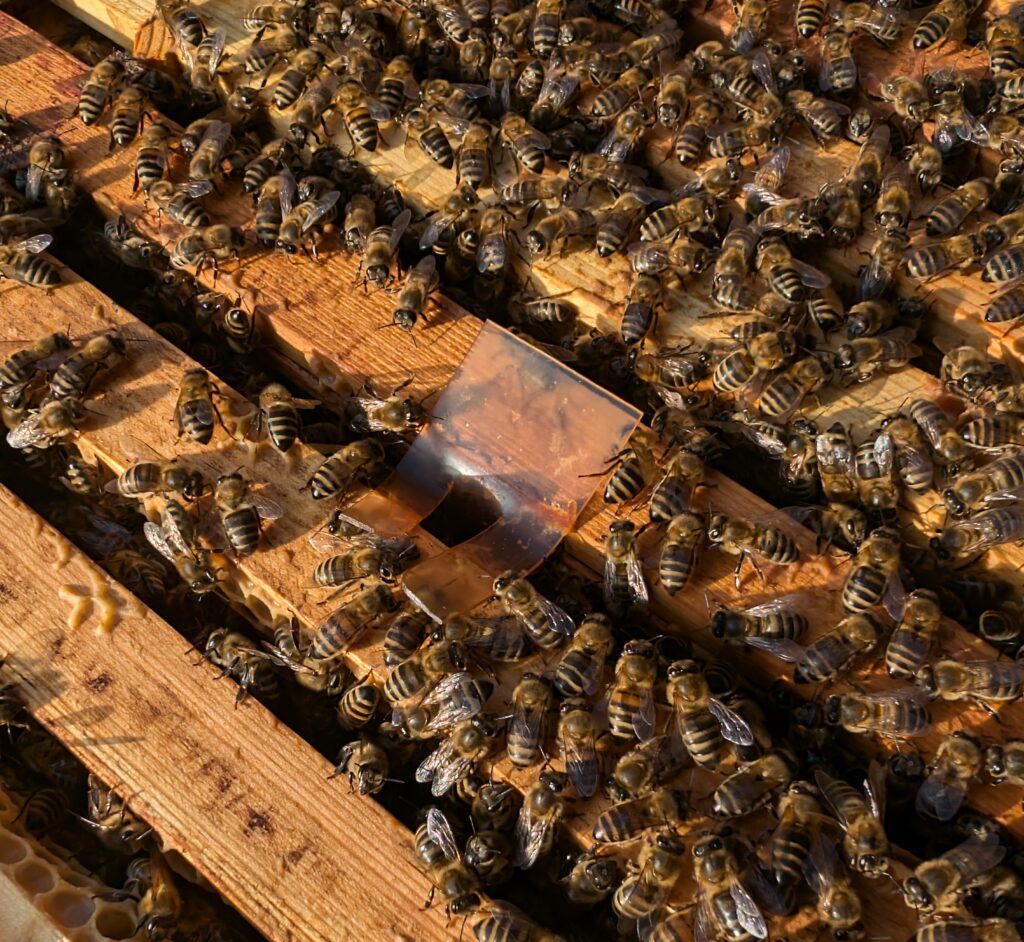
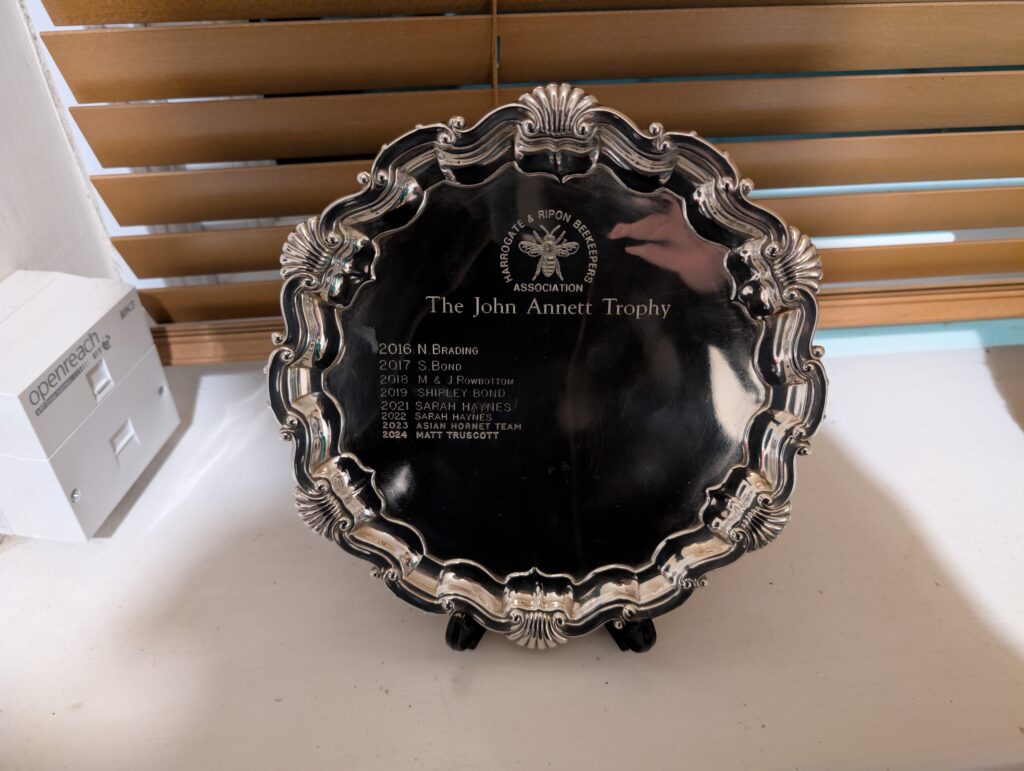
In March, Matt was yearning to spend time with his bees, but the temperatures remained just slightly too low for him to open up the hives. Happily, April was filled with sunshine – both literal and metaphorical. Matt finally got to see his bees, and so did I!
Windmill Hill
We arrived at Windmill Hill, and it was sad to see just two hives at the apiary. Last time I visited (see Faye’s Diary: August 2025), there were twice as many. The losses this winter really were brutal. Still, the two families who were around were healthy and excited to forage the flowering Oil Seed Rape.
I’d forgotten how recently Matt had moved some of his bees to Windmill Hill – this is actually the first spring he’s experiencing there. So, Matt’s scientific mind is curious to see how the Windmill Hill’s residents’ foraging efforts go this spring compared with the colonies at The Old Church. Which team will collect more nectar?

Inspection time!
The first hive we opened was bustling with activity yet these Western honey bees had such a calm demeanour. If any colony could prove that beekeeping can be a zen experience, it is them.
The second colony was a family of Buckfast honey bees and, well, we received quite a different reception! They seemed more agitated, or possibly excitable, and Matt quickly investigated the cause of their temperament.
That’s when he learned the bees had tricked him!
The previous week, he’d discovered two supersedure queen cells, indicating that the bees were planning to supersede the current queen. This could be because the current queen is old, unhealthy or even missing. These large cells are typically found in the middle of the comb and the bees tend to produce between one and three of them.
When we opened up the hive during my visit, we were met with the sight of several queen cells! Why were there so many? Were they swarm cells? Swarm cells are usually located on the edges of the frames and are produced in greater quantities.
Once again, bees prove themselves a mystery. Matt’s best guess is that they changed their mind about superseding the queen and decided they wanted to swarm instead.
To deal with the chaos, Matt split up these cheeky troublemakers. He moved two sealed queen cells, frames of brood and a frame of stores into a nucleus hive.
The absolutely incredible moment for me during this inspection was when I got to hear the sound of piping! Piping is a musical cry from a virgin queen when she has rivals in the hive. She is declaring that she intends to be the ruler of this colony! It’s a rare occurrence so I feel privileged to have heard it.
As we travelled from Windmill Hill to Marton-le-Moor, Matt admired the glorious fields of yellow, knowing that Oil Seed Rape helps his bees to grow strong.

The Old Church
Our first task was to check in with the pair of colonies who are descended from Matt’s original bees. Like the first colony at Windmill Hill, they were a lovely calming presence, so I wasn’t surprised when Matt told me that they are wise, cautious and sensible by nature. Knowing that the weather is erratic at this time of year, they are choosing to build up slowly but steadily.
And then we opened up the hive of bees who Matt purchased early last year and it was madness! They were frantic, we saw that the queen was busy laying, they’d built queen cells, and they’d started building on the ceiling! They are growing fast, so Matt will be racing to add fresh supers before they run out of space. These bees were clearly loving life – enthusiastic to be bees living the bee lifestyle.