Last week I told you we’d be delving into the speculation around why winter losses in the UK were so bad. So, here we are. I wouldn’t lie to you.
What actually happened?
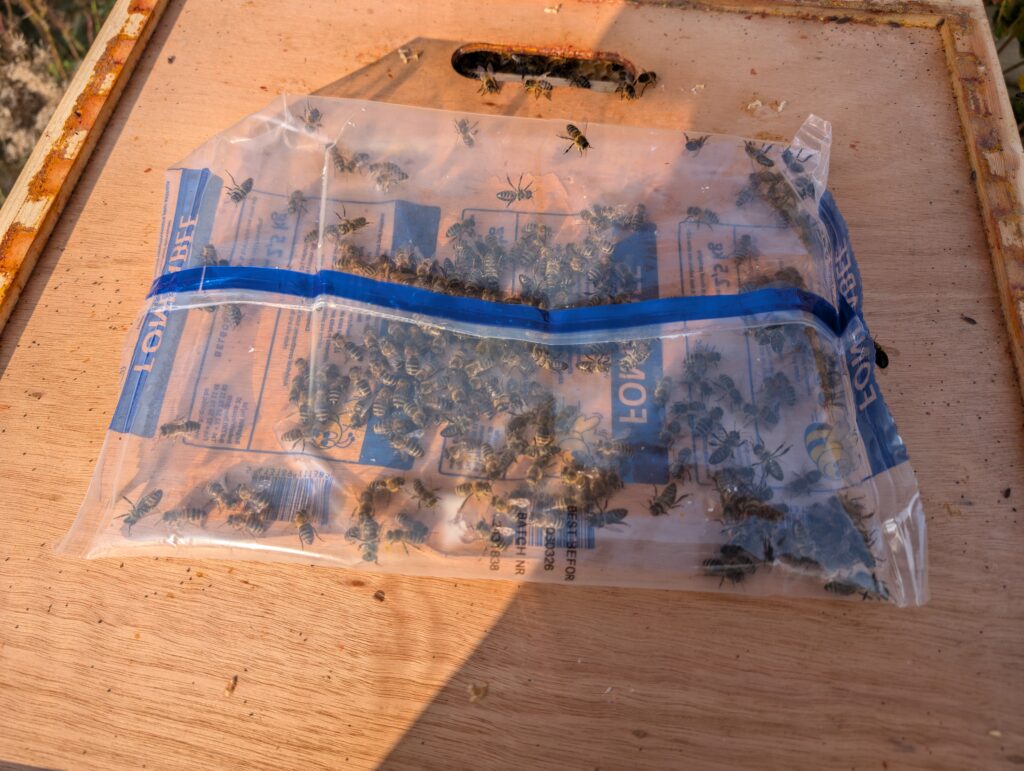
The official statistics from the National Bee Unit’s survey haven’t been released yet but British beekeepers believe the average losses may have been up to 50%! The previous winter’s average was 20.8% and the National Bee Unit states that “with good management, normal colony losses are expected to be in the region of 10%”. So, if losses really were 40%-50% this winter, something went horribly wrong.
Why was it so bad?
That’s the question. It’s time to evaluate the theories circulating around beekeeper communities. Are some of them nonsense? Might every single one have been a contributing factor in creating a devastating winter for honey bees?
Let’s take a look at each theory individually.
The 2025 Summer Drought
The non-stop rain of 2026 may make the concept of a drought feel foreign but summer 2025 was abnormally dry. The extended period of dry skies was widespread across central and northern England, including North Yorkshire where Matt’s bees live.
The dry weather first affected the behaviour of flowers, which reduced their nectar production in order to conserve water.
This, of course, led to the bees’ foraging trips proving less fruitful. They were expending energy to fly around their neighbourhood to search for supplies but weren’t able to bring much home.
It was following the usual June gap in honey production when Matt noticed things weren’t picking up again. His colonies’ storerooms were still surprisingly bare, so he made the decision not to take a summer crop of honey from them.
This was a wise and kind decision because even though it was summer, the bees had to start dipping into their stores to fuel themselves for their foraging trips. As existing supplies dwindled, finding nectar to make more honey was becoming more urgent, but the flowers had very little to give.
Families of bees across the country began to starve. This isn’t something beekeepers typically expect in summer, so dying colonies were going unnoticed in too many cases. The National Bee Unit sent out emergency alerts to beekeepers, telling them to check on their bees and feed them if they’re hungry!
The ongoing scarcity of nectar might have prompted the bees to prepare for winter earlier than usual. One indication of this being true is that drones were evicted from the hives unusually early.
Meanwhile, the alarmingly empty cupboards meant that the bees had to economise, which included feeding less to their queens. When the queen is insufficiently fed, she lays fewer eggs or might even stop laying altogether!
The brood break coinciding with early winter preparations may well have led to the queen creating a significantly smaller cohort of winter-ready daughters. Heading into the cold season, the family may have appeared to be big and strong, but many of the girls were summer workers who aren’t designed to survive the winter. Soon, the queen would have been left with very few attendants. When huddling together to keep warm over winter – which you can read about in ‘Do honey bees hibernate?‘ – safety in numbers is a reliable rule of thumb!
So, the bees were heading into winter mode early with very little honey stocked up and with too few winter workers in the hive. Uh oh!
This certainly seems like a solid explanation for why the winter was so brutal.
The War Against Wasps
As if a drought wasn’t enough for the bees to deal with, summer 2025 was also The Season Of The Wasp.
The weather was just the way wasps like it, so there were an awful lot of them out and about enjoying the sunshine. And what else would be on their minds other than “ooh, I fancy some raw honey”? So droves of them set out to break into any hive they could spot and rob the bees’ liquid gold.
At best, this caused severe stress to the colonies. At worst, it destroyed them. See ‘Matt’s Diary: July 2025‘ for the sad tale of Matt losing his newest addition.
To make matters even worse, the wasps were out in abnormally high numbers at the same time as the Varroa mite count peaks. This is because it is just before beekeepers perform the pre-winter treatment to fight back this parasitic mite.
In summer 2025, bees had to divert enormous time and energy to dealing with intruders when, as we know, they were already faint from hunger.
High Varroa presence, high wasp presence and barely any nectar would have left bee colonies weak and vulnerable heading into winter. No wonder they struggled to survive.
The Warm, Wet Winter
We may have dreamed of a crisp snowy winter, but instead we got rain, rain, rain.
The rain was a consequence of temperatures not dropping quite so low as usual. As British winters go, it was mild and soggy.
That means the bees who survived the summer and were responsible for caring for the queen over the colder months were living with a great deal of moisture in the air. Unfortunately, winter bees are better equipped to cope with a dry, freezing winter than a damp one.
Any hive will have some condensation inside in such weather conditions, but the moisture levels become problematic in a poorly insulated hive. Bees can do without water dripping onto them from the frames as they try to stay warm enough to survive the winter!
Furthermore, excess moisture can lead to mould on the frames, fermentation of the honey stores and could rot the wood of the hive. All of these cause health problems for the family of bees living there and can lead to death.
This is another likely factor in why UK bees struggled so badly this winter.
Would you like some more bad news?
Warm, wet winters seem to be the perfect conditions for overwintering Asian Hornets. This is going to cause even more trouble for our honey bees this year.
Haven’t they suffered enough?!
What can we do?
Understanding what went wrong is a crucial first step in figuring out how to improve things in the future.
Of course there are factors outside the control of beekeepers but there are lessons to be learned and steps that can be taken:
- We know that colonies were accidentally left to starve over the summer. Clearly, assumptions can prove fatal. So, beekeepers, keep up a regular routine of inspections and listen carefully when the bees tell you how they’re doing.
- Learn all you can about properly ventilating and insulating a hive.
- Read next week’s blog post! Matt has news to share about a new tool for the beekeeper’s arsenal against the Asian Hornet.