Another month has passed, so there’s another month of drama to tell you all about! Have a cuppa while I spill the tea!
Windmill Hill
Matt is still enamoured with the new apiary site at Windmill Hill. It’s a sunny location with a delectable range of forage for the bees to enjoy. It’s perfect!
So far, Matt has moved across two colonies from the original apiary to Windmill Hill.
We’re going straight in to the drama: Shortly after moving one of these colonies, the queen went missing!
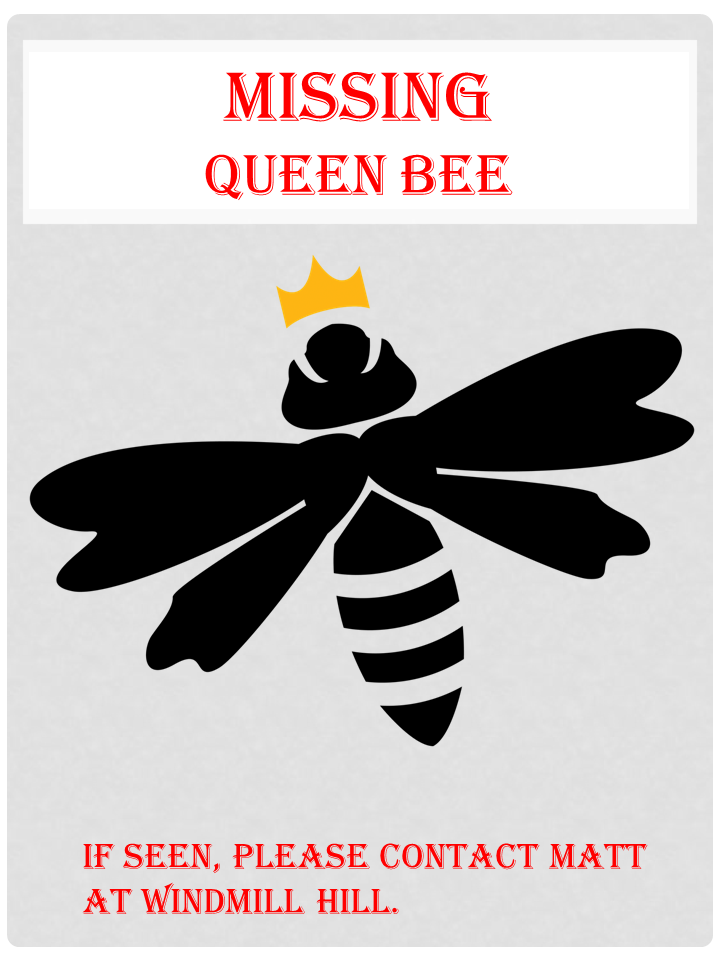
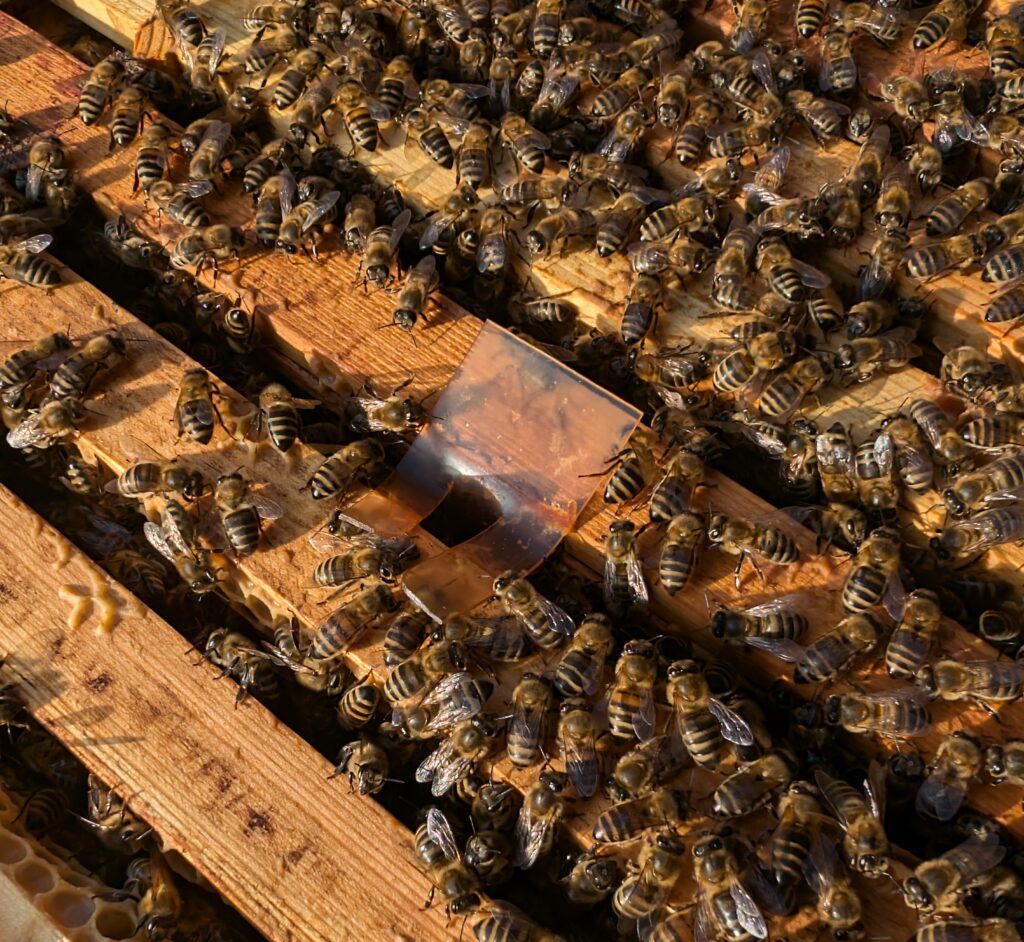
The colony created emergency queen cells, which alerted Matt to the missing royal. He searched every inch of the hive twice looking for her, but she was nowhere to be found. The colony will raise a new queen and recover, but what actually happened to the previous queen? Where did she go? I don’t think we’ll ever solve the mystery of her disappearance.
The other colony managed to hold on to their queen, but Matt still decided to persuade them to raise a new queen. Why? To develop another colony, of course! You can never have too many honey bees. He convinced them by transferring a frame of eggs, two frames of brood, some food stores and all the nurse bees on those frames into a nuc box. The nurse bees will select some of the eggs to develop into potential queens. Once a queen ascends to the throne, takes her mating flight and begins laying, Matt will provide this nucleus colony with a full-sized hive and they will become a full-sized family.
For the rest of this year, Matt will prioritise helping them to prepare for winter rather than worrying about honey production because it’s too late in the year to expect surplus food. A healthy colony is far more important!
Sadly, they are currently not in the best health. Later in the month when Matt went to perform a routine inspection, he quickly saw signs of the disease Nosema. The outside of their home was covered in feces! There aren’t any medicines that cure Nosema, but he can help them through their illness by using the power of hygiene and by making sure they’re warm and well fed, so that they stay strong enough to get better.
On 8th June, Matt caught a swarm! Actual Honey has welcomed in a brand new family. This colony is living at Windmill Hill, so Matt now has four hives at this beautiful site.
Using his bee expertise, Matt recognised that this swarm must have been a cast swarm.
Normally, when bees swarm, the established queen will leave with a group of workers after making preparations for the remaining bees to raise a new queen so that they can continue living in the same hive. A cast swarm occurs when things go a little wrong. It is a second swarm departing from the same colony, led by one of the young virgin queens who was raised to replace the established queen. Cast swarms aren’t ideal because they can leave the original colony weakened by drastically reduced numbers. There should be only one surviving heir – often after a royal duel to the death – but clearly this hive had at least two survivors, so one young queen fled with some attendants in order to establish her own kingdom. And that kingdom is in Matt’s apiary!
But how could Matt tell that she was a cast swarm queen? She was laying multiple eggs in a single cell, which is behaviour that indicated she had only recently mated after reaching Windmill Hill, meaning she must have been a virgin queen when she swarmed.
The Old Church
Matt has five hives at the original apiary, filled with hardworking colonies.
One colony was thriving so hard that, to keep up with them, their hive had to become a 6’2″ skyscraper! The queen apparently thought this was absurd and moved next door to a more reasonably sized hive. While the replacement queen was finding her feet, the population was in a natural decline, but they will make a full force comeback. The new queen has been laying like she wants a 12’2″ palace!
So, you may be not at all shocked to hear that Matt needed to add boxes to the hives faster than he could build them! Consequently, he dedicated June to getting more organised than ever! He made sure to get supers, brood boxes and frames assembled and ready to go. With so many happy and healthy colonies, Matt suspects the bees will be hauling in the nectar and producing a bountiful summer honey harvest. I bet the only limit to how much they produce will be the space they have to store it: those frames and supers are going to be needed.
Thanks to the enthusiastic colonies in this apiary, June saw six supers full of golden spring honey just waiting to be harvested. But Matt does indeed have to wait because he’s caught a cough, and coughing into honey that good would be a crime!
While he couldn’t harvest the honey, Matt was still able to install varroa boards, which are simply sticky boards that allow beekeepers to assess how many of those honey bee tormentors are present in a hive. After a week, Matt will check the boards and determine which treatment options to take, if any. You can read about the varroa mite in more depth here. Sadly, a couple of Matt’s colonies were indicating that the mites had been taking a toll, so he is expecting to intervene. The health and wellbeing of the bees is always Matt’s number one priority.
The Hives
With two new colonies since May and the new apiary site in action, our table from last month needs updating:
| Hive | Lineage | About | Location | |||
| Hive A | Family 1 | Matt purchased this colony in 2022 as part of the Beginner Beekeeping Course he took through Harrogate & Ripon Beekeepers Association. His beekeeping journey begins! | The Old Church | |||
| Hive B | Family 1 | In 2023, Matt split colony A but tragically those in Hive B perished. To this day, he isn’t sure what happened to them but the memory of discovering his colony dead still makes him sad. In 2024, colony A had grown so much they decided to swarm, but Matt managed to capture them and they became the new Hive B! Read the full story of Matt’s first swarm here. | The Old Church | |||
| Hive C | Family 2 | In 2025, Matt purchased a family of bees from a beekeeper who developed a bee sting allergy. | Windmill Hill | |||
| Hive D | Family 2 | The bees in Hive C quickly showed signs of being ready to swarm, so Matt spilt the colony to form Hive D. | The Old Church | |||
| Hive E | Family 1 | Hive E was established in 2025 when the bees in Hive B outgrew their home and needed to be split. | The Old Church | |||
| Hive F | Family 1 | In 2025, Hive A was once again split and the bees took up residence in Hive F. | The Old Church | |||
| Hive G | Family 3 | Hive G is a colony of new bees that Matt caught when a beekeeping friend’s bees swarmed in 2025. | Windmill Hill | |||
| Hive H | Family 4 | Hive H joined Actual Honey after Matt was in the right place at the right time and caught a swarm of new bees in June 2025. | Windmill Hill | |||
| Hive I | Family 2 | Hive I began in 2025 as a nucleus colony comprised of bees from Hive C. | Windmill Hill |
Teaching
Matt is truly fascinated by bees and he won’t be satisfied until he infects everyone on the planet with a deep appreciation for this marvel of nature. So, he’s still going out to preach teach. Matt delivered two talks in June, complete with awkward coughing fits.
The first talk was given at Harrogate and Ripon Beekeepers Association, and was all about the rapid expansion the Actual Honey empire has seen. Going from 2 colonies to 9 in the space of half a year has been one hell of a learning experience for Matt, so he had plenty of lessons from the bees to share with other members of the association. The main theme was Matt’s determination to be ready to respond to anything, and his talk was called “From Chaos to Control: Streamlining Your Apiary Management”.
The second talk was delivered at the Royal Horticultural Society’s garden venue Harlow Carr. Matt led the Beekeeping Taster Day there, which meant he had to cover absolutely everything someone needs to consider when thinking of taking up beekeeping. Matt was provided with a set of slides to use but they were in dire need of a makeover. Channeling his inner beautician, he disposed of the unnecessarily ugly slides, added fetching images and, knowing that inner beauty matters most of all, he included inspiring facts that communicate just how incredible bees are.
Here is one fact that has Matt in awe of bees:
Bumblebees are capable to learning to perform a series of non-natural tasks, such as pulling an object by a string to a certain position, in order to gain access to a source of food. As if that isn’t impressive enough, they are also able to teach other bumblebees to perform the same actions to benefit from the same reward.
Bees are so intelligent and possess a phenomenal community spirit!